
Towing and repairs
Towing and repairs
After a crash, your car may be towed to a storage lot. Storage fees add up every day, so it helps to act fast. The Texas Department of Licensing and Regulation (TDLR) licenses tow companies, tow truck drivers and private storage lots. Texas law and TDLR rules set the limits below.
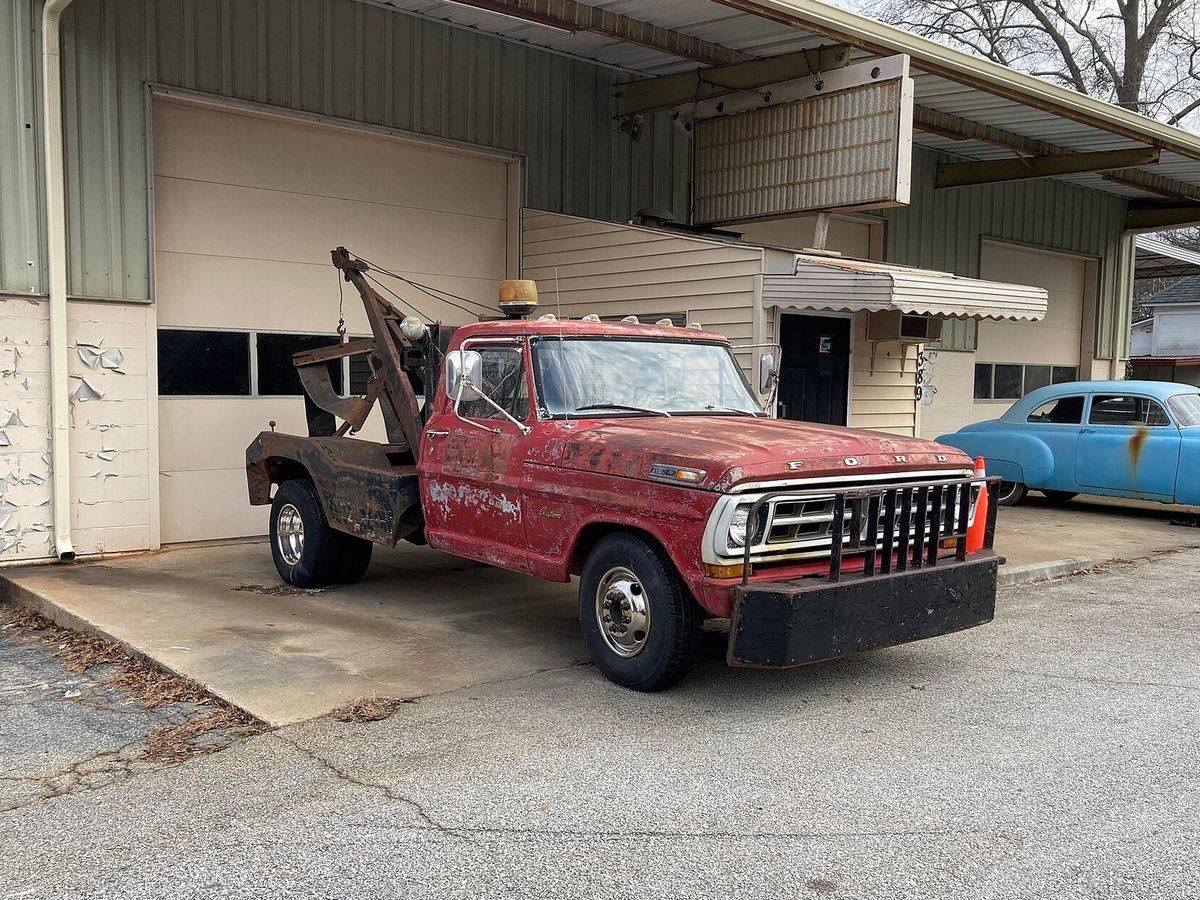

Kinds of tows #
- Consent tow: a tow you (or the person in charge of the car) asked for, such as when you call your roadside service.
- Nonconsent tow: any tow you didn't ask for. This includes a tow from a crash scene and a tow from a private parking lot.
- Incident management tow: a tow truck called to a crash or other traffic incident, often by police. TDLR counts these as nonconsent tows, even if you asked for the tow, when your car was affecting traffic on a public road.
At the crash scene #
What a tow can cost #
- Crash-scene (police) tows: Texas sets no statewide maximum. Cities and counties may set these fees.
- In Dallas, the city's maximum for a police-called tow of a regular car or light truck (up to 10,000 pounds) is $165, under an ordinance passed September 17, 2025. Extra charges can apply for jobs over two hours, heavier vehicles and miles outside the city.
- In Fort Worth, the police auto pound page lists $180 for a standard tow and a $32 administrative fee (fees as of October 1, 2023).
- Private parking lot tows: TDLR caps a light-duty tow (10,000 pounds or less) at $272. Cities can set lower limits.
- Consent tows (ones you ask for): Texas sets no statewide price cap. Ask the price before you agree to the tow.
- No surprise fees. For a nonconsent tow, a tow company may not charge a fee that isn't on the list Texas law allows.
Storage lot fees: the limits #
Texas sets maximum fees for storage lots. These are the limits TDLR lists for vehicles 25 feet long or less:
| Fee | Maximum |
|---|---|
| Daily storage | $22.85 per day |
| Impoundment fee (one time, only for work actually done) | $22.85 |
| Notification fee (mailing the required notice) | $50 |
Vehicles longer than 25 feet can be charged up to $39.99 per day for storage.
More rules that protect you:
- No notification fee if you're quick. A lot can't charge it if you pick up the car within 24 hours, or before the notice is sent.
- Short stays. If your car is at the lot for less than 12 hours, the lot can charge only one day of storage.
- No extra fees. A lot can't charge fees beyond the ones the rules allow. TDLR names some fees that are not allowed, such as "environmental fees," notary fees, and fees to get your belongings out of the car.
- Itemized bill. You must get a tow ticket that lists each charge. The bill must show how to file a complaint with TDLR.
- Posted signs. The lot must post its fees and the kinds of payment it takes where you can see them.
Storage keeps adding up. At $22.85 a day, a week of storage is about $160, on top of the tow and other fees. Tell your insurance company where your car is right away.
Getting your car back #
Towing and repairsDFW Car Accidents
What to bring
How you can pay: The lot must accept cash, credit cards and debit cards. If a lot refuses your credit card, it can't charge storage for the days after you offered the card.
When the lot must release your car:
- A lot that takes in cars 24 hours a day must release cars any time, within one hour of your request.
- Other lots must release cars within one hour from 8 a.m. to midnight, Monday through Saturday, and from 8 a.m. to 5 p.m. on Sunday, except national holidays.
Your belongings: You can get papers out of the glove box or console to prove you own the car. Once you do, the lot must let you take out your personal things, unless police say otherwise. TDLR says you don't have to pay a fee to do this. You can also get access to the car during business hours for insurance or repair estimates.
Don't sign away your rights. If police called the tow, the lot can't ask you to sign a form approving a tow, repairs or other services. It also can't make you sign a release that turns a police tow into a "consent" tow or adds charges TDLR doesn't regulate.
Deadlines that matter #
- The lot must send notice. For a car registered in Texas, the lot must send a notice by certified mail to the owner and lender within five days after the car arrives (but not sooner than 24 hours). Until that notice goes out, it can charge no more than five days of storage.
- After 10 days, the car is treated as abandoned. If no one claims the car before the 10th day after the notice, Texas law says the lot must treat it as abandoned.
- Then it can be sold. A second notice goes out between 15 and 21 days after the first. The lot can sell the car at a public sale 30 days after that second notice.
City police pounds follow a different law. There, you have 20 days from the notice to claim the car. The state storage fee limits above still apply to city-run lots.
Common questions #
Think a tow or fee was wrong?
- Ask for a tow hearing. For any nonconsent tow, including a police tow, you can ask for a hearing in Justice of the Peace court.
- File before the 14th day after your car went into storage, not counting weekends and holidays.
- The court charges a filing fee. DFW justice courts charge about $41 to $54 (for example, $54 in Dallas and Tarrant counties), so ask the court first.
- The hearing must be held within 21 days after the court gets your request.
- The court decides whether there was a good reason for the tow and whether the charges went over the limits.
- When you pay, the tow company or lot must give you written notice of your hearing rights.
- Ask the justice court clerk how to file.
- File a complaint with TDLR. You can use TDLR's online complaint form or call TDLR at 800-803-9202 (in Texas) or 512-463-6599. A complaint is not the same as a tow hearing, but you can do both.
- Call your local police if you think you were the target of a towing scam.
Who pays for towing and storage?
TDI says:
- If you have collision and comprehensive coverage, your policy should pay reasonable towing and storage fees.
- If you have liability-only coverage, your own policy won't pay them, so you may have to pay the bill yourself.
- If the other driver caused the crash, their insurance company might pay reasonable towing and storage fees, even if you have liability-only coverage.
Keep every towing and storage receipt for your claim. See Insurance claim basics.
Choosing a repair shop #
You choose the shop. Texas law says your insurance company can't limit your choice of repair shop. It can't tell you, out loud or in writing, that you must use a certain shop or one on its preferred list. The other driver's insurance company can't require a certain shop either.
Tips from TDI:
- Get estimates from more than one shop. Show them the insurance company's estimate.
- If the shop finds more damage once work starts, it can send your insurance company an updated estimate.
- Read any agreement before you leave your car. Don't sign a contract with blank spaces, and don't pay the full amount up front.
About parts: TDI says insurance companies only have to pay for parts of "like kind and quality" to the damaged ones. They don't have to pay for new parts from the carmaker. Ask the shop what kind of parts it will use. Your insurance company can't stop the shop from telling you where the parts come from and what it charged for them.
Problems with a body shop? TDI doesn't regulate body shops. TDI says complaints about body shops go to the Texas Attorney General's office.
Towing and repairsDFW Car Accidents
Quick checklist
Next steps

Insurance claims
How car insurance claims work in Texas after a crash. Which policy pays, adjusters, rental cars, total losses…
DFW resources
Police non-emergency numbers and crash report pages for 12 DFW cities and the Dallas, Tarrant, Collin and Denton county…
Crash report
How to buy a Texas crash report from TxDOT or a DFW police department.

At the scene
A calm checklist for the first minutes after a car crash in Texas.
This page is general information, not legal advice. It is not a substitute for the advice of an attorney. Fees and rules can change, so check with TDLR or your city. Last checked October 2026. See our disclaimer.
Was this page helpful?
Your answer is sent to the site team with this page's address. Privacy policy
Photo: "Paperwork file" by Ian Lamont (IN 30 MINUTES Guides), CC BY 2.0, via Flickr. Photo: "Signing Paperwork" by Dan Moyle, CC BY 2.0, via Flickr. Cropped. Photo: "Triangle de présignalisation" by Roulex 45, CC BY-SA 3.0, via Wikimedia Commons. Cropped; license plate blurred; this version is licensed CC BY-SA 3.0. All photo credits