
If you want a lawyer
How to find and check a lawyer
You don't have to hire a lawyer after a crash. Some people handle simple property damage claims on their own. But if you were hurt, if an insurance company denies your claim, or if you just feel stuck, talking with a lawyer can help you understand your options.


When it may make sense to talk to a lawyer #
- you or someone in your car was hurt
- someone died
- the insurance company denies your claim, or blames you
- the other driver had no insurance, or not enough
- a city, county or state vehicle was involved
- you are asked to sign a release or settlement and don't understand it
- you are getting close to a deadline
Know your deadlines #
Texas law sets time limits for filing a lawsuit. For many injury and property damage claims, it is two years from the crash. For a death, it is generally two years from the date of death. There are exceptions.
If a government vehicle was involved, such as a city truck or a bus, the deadlines can be much shorter. Texas law says a government is entitled to notice of a claim within six months of the incident, and a city charter can set its own notice rules.
A lawyer can tell you which deadline applies to you. Don't wait until the last minute.
How to look up a Texas lawyer #

The State Bar of Texas runs a free public directory called Find A Lawyer on texasbar.com. You can search by name, county or practice area. "Accidents and Injuries" is one of the practice areas you can choose.
Each lawyer's profile shows:
- whether they are eligible to practice in Texas
- their bar card number and the date they were licensed
- their main office location
- any public disciplinary history, such as past sanctions
Some details, like practice areas, are reported by the lawyers themselves. The State Bar also posts a daily list of Texas lawyers who are not currently eligible to practice.
Before you hire anyone, look them up. Make sure they are eligible to practice, and read any public discipline on their profile.
What "board certified" means #
You may see a lawyer described as "Board Certified, Personal Injury Trial Law." This title comes from the Texas Board of Legal Specialization (TBLS), a board set up by the Texas Supreme Court. TBLS gives it to lawyers who meet extra requirements. For personal injury trial law, these include years of practice in the area, a minimum number of trials, references from judges and lawyers, extra training, and a written exam. Certification lasts five years and must be renewed.
Board certification is voluntary. A lawyer doesn't need it to handle injury cases. You can check a lawyer's certification on the TBLS website, or use the "Board Certified in" filter in the State Bar directory.
Certified lawyer referral services #
A lawyer referral service matches you with a lawyer. In Texas, a referral service must be certified under state law, and only government or nonprofit groups can be certified. The State Bar keeps the official list of certified lawyer referral services.
Some things to know about certified services:
- Their ads must say they are certified under Chapter 952 of the Texas Occupations Code.
- Under Texas law, the lawyer and the service together can't charge you more than $20 for the first 30 minutes of your first office visit with the lawyer.
- They must have a way to handle complaints and to remove lawyers who don't handle referred clients responsibly.
The State Bar's own Lawyer Referral & Information Service can be reached at 800-252-9690, Monday through Friday, 8:30 a.m. to 4:30 p.m. Central time. Se habla español. For Dallas County and Tarrant County, the State Bar sends callers to the local certified services on its list. If you live in another county, including Collin or Denton, call the State Bar's service directly.
To see which certified services serve your county, check the State Bar's official list linked above. The list changes, because each service must renew its certificate every year. We are not connected with any referral service, and we don't recommend one over another.
Watch for illegal solicitation #
After a crash, you may get calls, visits, texts, letters or social media messages from people you never contacted. Texas has strong laws about this.
- In-person, phone and message solicitation. Texas law generally makes it a felony to solicit you in person, by phone, or by social media message or other electronic contact, to hire a lawyer for someone's financial gain. This applies at any time, not only right after the crash. Paying "runners" to find clients is also a crime.
- The 30-day rule. During the first 30 days after the crash, lawyers, chiropractors, doctors and other licensed professionals generally may not send you any offer about your crash unless you contacted them first. This covers letters as well as calls, visits, texts, social media messages and other electronic messages.
- "Do not contact" requests. If the crash report shows that you did not want to be contacted, the law presumes you don't want these offers. That protection doesn't end after 30 days.
- Gifts or money to hire. A lawyer may not offer you money or anything of value to hire them.
- Your contract. If a lawyer's contract with you came from illegal solicitation, Texas law may let you cancel it. You may also be able to get back fees you paid, and possibly more. A different lawyer can tell you whether this applies to you.
Questions to ask before you hire #
The State Bar suggests asking:
How to find and check a lawyerDFW Car Accidents
Questions to ask
Meeting with a lawyer does not mean you have to hire them. It is fine to talk with more than one.
Understand the fee agreement #
Many injury lawyers work on a contingent fee. That means the fee is a share of any money recovered. Texas law and the rules for lawyers say:
- A contingent fee agreement must be in writing and signed by you and the lawyer.
- It must say how the fee is figured. If the percentage changes for a settlement, a trial or an appeal, it must list each percentage.
- It must say which case expenses come out of the money recovered, and whether they come out before or after the lawyer's fee is figured.
- At the end, the lawyer must give you a written statement showing the outcome and how your share was figured.
Ask who pays case costs, like court fees and expert fees, and when. Read the whole contract before you sign it. Make sure everything you agreed to is written down, and keep a copy.
Red flags #
If you have a problem with your lawyer #
- Talk to your lawyer first. Many problems come from a simple misunderstanding.
- Call the State Bar's Client-Attorney Assistance Program (CAAP) at 800-932-1900. CAAP helps people with problems with their lawyer. It can't get fees or refunds back for you.
- File a grievance with the State Bar if you think a lawyer broke the rules. You can file it on the State Bar's grievance website. You must use the State Bar's current grievance form.
- You can change lawyers. The State Bar says you have the right to fire your lawyer and hire someone else, and the lawyer must return your file. You may still owe a fair share of the fee for work already done, depending on your fee agreement.
Next steps

Insurance claims
How car insurance claims work in Texas after a crash. Which policy pays, adjusters, rental cars, total losses…

DFW resources
Police non-emergency numbers and crash report pages for 12 DFW cities and the Dallas, Tarrant, Collin and Denton county…

Medical care
Why it helps to get checked after a car crash, how Texas auto insurance can help with medical bills, and how to keep…
Crash report
How to buy a Texas crash report from TxDOT or a DFW police department.
This page is general information, not legal advice. It is not a substitute for the advice of an attorney. This site is not a lawyer referral service and does not refer anyone to lawyers. Last checked October 2026. See our disclaimer.
Was this page helpful?
Your answer is sent to the site team with this page's address. Privacy policy
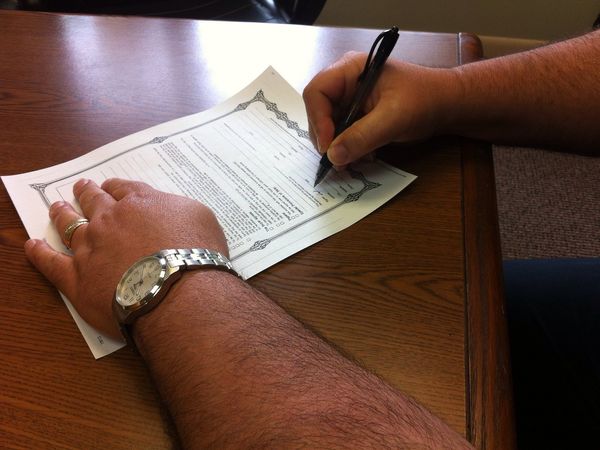
Photo: "Paperwork file" by Ian Lamont (IN 30 MINUTES Guides), CC BY 2.0, via Flickr. Photo: "Signing Paperwork" by Dan Moyle, CC BY 2.0, via Flickr. Cropped. All photo credits