
Right after the crash
What to do at the scene
The first minutes after a crash are hard. Your heart may be racing, and it can be tough to think. That is normal. Go one step at a time. You can keep this page open on your phone and use it as a checklist.


1. Get safe first #
- Stop. Texas law says a driver in a crash must stop at the scene, or as close to it as possible. Do not drive away, even from a small crash.
- Turn on your hazard lights.
- Move out of traffic if it is safe. If no one is hurt and the cars can be driven, move them out of the traffic lanes. On a freeway in a metro area like DFW, Texas law says to do this as soon as you can. Go to the frontage road, the nearest safe cross street, or another safe spot close by. Then finish the steps below there.
- If a car can't be moved, get yourself and your passengers away from moving traffic, but only if you can do it safely. If getting out is not safe, stay in the car with your seat belt on and call 911.
2. Call 911 when you need to #
Texas law requires drivers to report a crash to police right away, by the quickest way possible, when someone is hurt or killed, or when a car can't be driven normally and safely. Inside a city, that report goes to the city police. Outside city limits, it goes to the county sheriff or the Texas Department of Public Safety (state troopers). Calling 911 reaches the right agency.
For a minor crash where no one is hurt and every car can drive away, you can call the police non-emergency number instead. You can find the number for your city on our DFW resources page.
3. Check on everyone #
- Ask everyone involved if they are hurt. Tell the 911 operator what you see.
- Texas law says drivers must give reasonable help to anyone hurt in the crash. That includes taking them, or arranging a ride, to a doctor or hospital if they clearly need care or ask for it. In most cases, calling 911 is the best way to do this.
- Unless there is danger, such as fire or traffic, wait for emergency crews before moving someone who is hurt.
- Some injuries don't show up right away. See Getting checked by a doctor.
4. Swap information with the other driver #
Texas law requires each driver in a crash to give the other people involved:
- their name and address
- the license plate (registration) number of the car they were driving
- the name of their auto liability insurance company
- their driver's license, if asked and if they have it
A driver also has to show proof of insurance to another person in the crash who asks for it.
The easy way: Take clear photos of the other driver's insurance card, driver's license and license plate. Let them take photos of yours. Stay calm and polite, even if they are not.
What to do at the sceneDFW Car Accidents
Also write down
If you hit a parked car with no one in it, stop. Find the owner, or leave a note where it will be easy to see. The note must give your name and address, the name and address of your car's owner, and a short note on what happened. Texas law requires this.
If you hit a fence, sign or other property next to the road, take reasonable steps to find the owner and tell them. Give your name, address and plate number, and show your driver's license if asked.
5. Take photos and notes #
Photos are easy to take now and hard to get later. If it is safe, take pictures of:
What to do at the sceneDFW Car Accidents
Photos to take
Then make quick notes on your phone while it is fresh:
What to do at the sceneDFW Car Accidents
Notes to make
6. Talk with the officer #
- Stick to the facts. Say what you saw and what you know. If you are not sure about something, it is fine to say so.
- There is no need to argue about who caused the crash. Insurance companies look at fault later, and so do courts if a case gets that far.
- Ask how to get the crash report. Get the officer's name, the agency, and the report or case number. See How to get your crash report.
- Tell the officer if you don't want sales offers. Texas crash reports record whether each person wants offers from lawyers, chiropractors, doctors and others who may want your business.
7. Be careful with tow trucks #
Learn more on Towing and repairs.
If the other driver drives off #
- Don't chase them.
- Write down what you can: plate number, make, model, color and which way they went.
- Call 911. Make sure a police report is made. TDI says uninsured motorist coverage won't pay for a hit-and-run you didn't report to police.
- Tell your own insurance company. Uninsured motorist coverage may help. In Texas, to use this coverage when the other driver is unknown, the other car generally must have actually hit you or your car. If it did, say so when you report the crash, and keep your photos of the damage.
If police don't come #
If no officer comes to the scene, you still need to swap information. Take good photos and notes. Texas drivers no longer send their own crash report to the state. If police don't investigate, there may be no officer report to buy later, so your own photos and notes matter more. Some cities have their own rules, so you can ask the police non-emergency line what they need from you.
What to do at the sceneDFW Car Accidents
Before you leave the scene
Next steps
Medical care
Why it helps to get checked after a car crash, how Texas auto insurance can help with medical bills, and how to keep…
Insurance claims
How car insurance claims work in Texas after a crash. Which policy pays, adjusters, rental cars, total losses…
Crash report
How to buy a Texas crash report from TxDOT or a DFW police department.
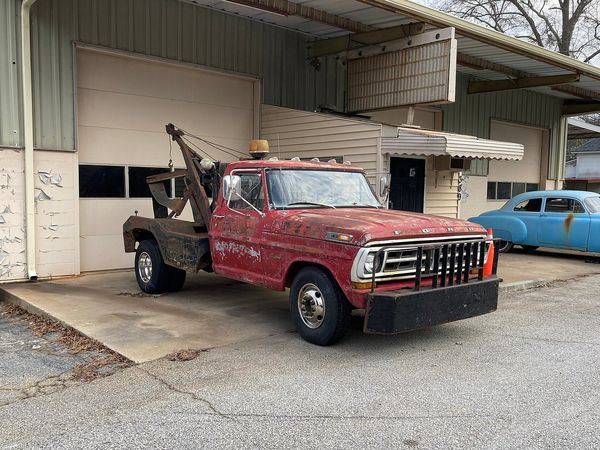
Towing and repair
Your rights after a crash tow in Texas: tow and storage fee limits, getting your car and belongings back, tow hearings…
This page is general information, not legal advice. It is not a substitute for the advice of an attorney. Laws change, so check the official sources. Last checked October 2026. See our disclaimer.
Was this page helpful?
Your answer is sent to the site team with this page's address. Privacy policy
Photo: "Paperwork file" by Ian Lamont (IN 30 MINUTES Guides), CC BY 2.0, via Flickr. Photo: "Signing Paperwork" by Dan Moyle, CC BY 2.0, via Flickr. Cropped. Photo: "1971 ford f-350 custom holmes 440" by Rjluna2, CC BY-SA 4.0, via Wikimedia Commons. Cropped; this version is licensed CC BY-SA 4.0. All photo credits